Working at height presents countless risks, but one of the most overlooked hazards is the danger posed by dropped tools.
Whether you’re working on a construction site, a single dropped tool can have serious consequences.
Some industry reports estimate that more than 7,000 workplace injuries occur each year as a result of falling objects. The message is clear: dropped objects continue to be a major safety concern across multiple industries.
Industry safety campaigns have also highlighted that a screwdriver dropped from approximately 10 metres can generate surprisingly high impact forces, with some comparisons likening the impact energy to that of a washing machine striking the ground.
The good news is that many dropped tool incidents are entirely preventable.
This guide explains how to tether tools safely, choose the correct tethering solution and reduce the risk of dropped object incidents while working at height.
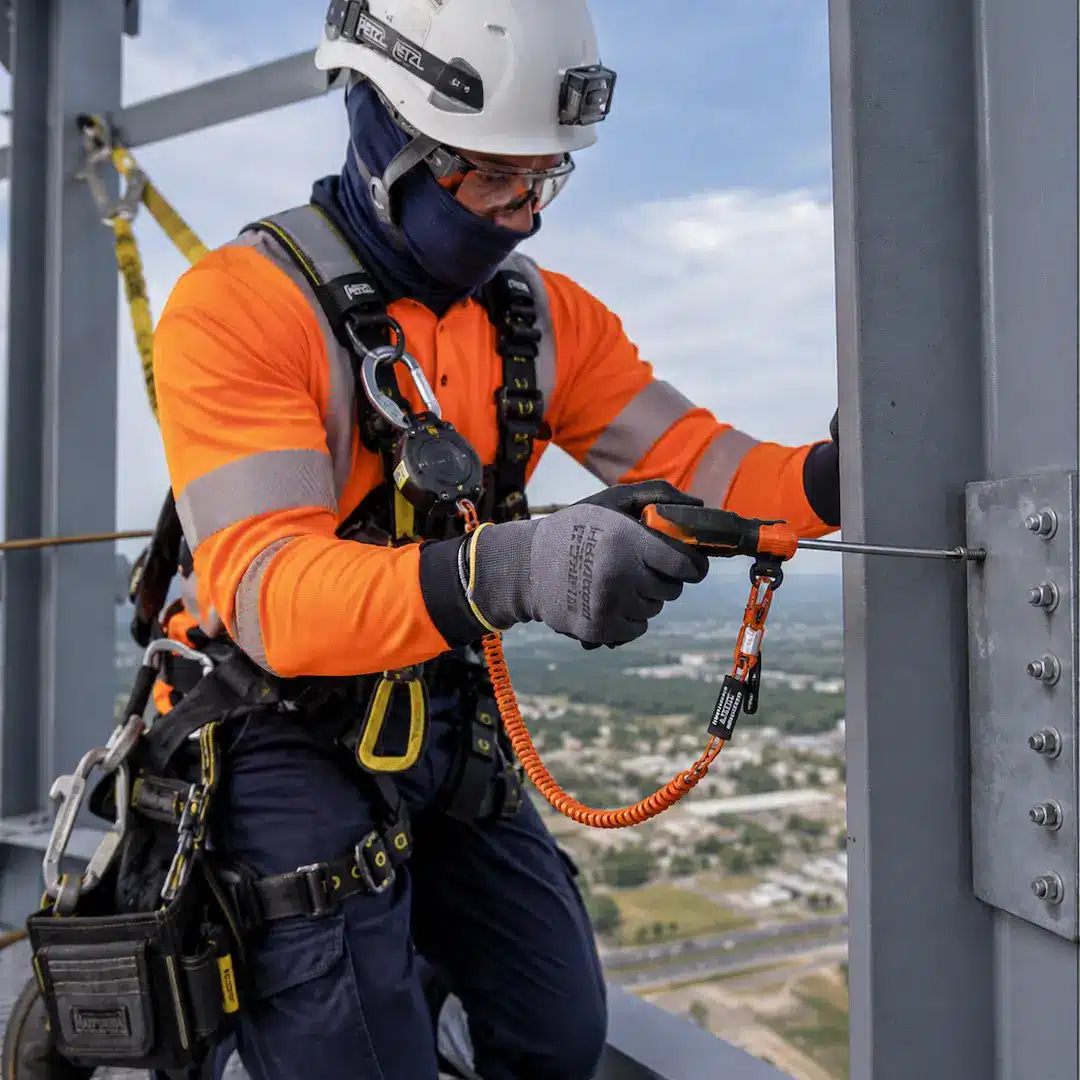
Tool tethering involves attaching tools to a worker or a secure spot, like a harness, belt, or bag with a special tether or lanyard. This way, if a tool slips or gets bumped during use, it won’t plummet to the ground. It’s a key safety measure in dropped object prevention and is commonly used in construction, telecoms, utilities, offshore work, renewable energy, and maintenance, keeping everyone much safer on the job.
When discussing work at height safety, most people immediately think about personal fall protection.
However, protecting workers, equipment and members of the public below is equally important.
A dropped tool can:
Effective tool tethering is key for organisations wanting to minimise those risks and boost overall site safety.
All tools can become a hazard if dropped while working at height. Any tool you carry should be securely tethered to prevent it from falling and causing injury to yourself or others. Stay safe and always tether your tools.
One of the most common questions we hear is:
How do I choose the right tether for my tool?
The answer depends on the design of the tool, how frequently it is used and whether it already includes an attachment point. Learn more on our tethering guide.
| Tool Type | Description | Recommended Tethering Solutions |
| Captive Holes | Holes preformed into the body of the tool | Shackle, Pro Shank, Bayonet Tether, Wrap Tether |
| Captive Handles | Closed loops built into the structure of the tool | Bayonet Tether, Wrap Tether, Dyneema Anchor |
| Open-Ended Handles | Handles open at one end with no captive holes | Pro Shank, Wrap Tether |
| Moulded Grips | Shaped or waisted rubber handles on hand tools | Shank, Pro Shank, Wrap Tether |
| Rotating Tools | Tools requiring rotation during operation | Pro Shank, Wrap Tether |
| Shaped Tools | Tools with a tapered mid-section | Shackle, Shank, Wrap Tether, Pro Shank |
| Waisted Tools | Larger tools with a built-in narrow waist section | Wrap Tether, Bayonet Tether, Dyneema Anchor, Drill Shoe, Drill Corset |
| Insulated Tools | Non-conductive tools for electrical work | Pro Shank, Wrap Tether |
| Multiple Handles | Tools with multiple handles and no natural waist | Follow Blueprint Tool-Specific Solutions |
| Grinders | Angle grinders and similar equipment | Grinder Tether |
| Drills | Power drills and impact drivers | Drill Holster, Drill-Specific Solutions |
Choosing the right tool tether starts with understanding how different tethering solutions are designed to work.
Rather than selecting a tether based solely on the type of tool you’re using, it’s important to consider the tool’s shape, handle design, attachment points and intended application.
The Leading Edge Tethering Blueprint helps identify the most suitable solution based on these characteristics.
The Wrap Tether is a temporary tethering solution designed to create a secure attachment point on tools that may not have an existing tethering location.
Using a self-bonding tape system and integrated Dyneema tether, it can be fitted quickly to a wide range of hand tools, making it a popular choice for retrofitting existing equipment for work at height.
Its removable design allows tools to be tethered without permanently altering the tool itself.
The Shank Tether is a semi-permanent tethering solution that uses a heat-shrink sleeve to create a durable attachment point on compatible tools.
Designed for fast installation and day-to-day use, it provides a neat, low-profile tethering option while maintaining the functionality of the tool.
Shank tethers are commonly used on hand tools where a more permanent attachment method is preferred.
The Pro Shank Tether builds upon the standard Shank Tether design by providing an increased working load limit and enhanced versatility across a wider range of tools.
It is particularly useful where higher load capacities or additional attachment options are required.
The X-Pro Shank Tether is designed for tools that require multiple tethering attachment points or additional flexibility when securing equipment at height.
Its specialised design helps accommodate more complex tool geometries while maintaining a secure tethering connection.
The Bayonet Tether is designed for tools featuring captive holes, captive handles or suitable attachment points.
Its versatile attachment method makes it a popular option for many common hand tools used across construction, utilities, telecommunications and maintenance environments.
Dyneema Anchors provide lightweight yet extremely strong attachment solutions for tools and equipment that require alternative tethering methods.
Their flexible design makes them particularly useful where traditional attachment systems may not be suitable.
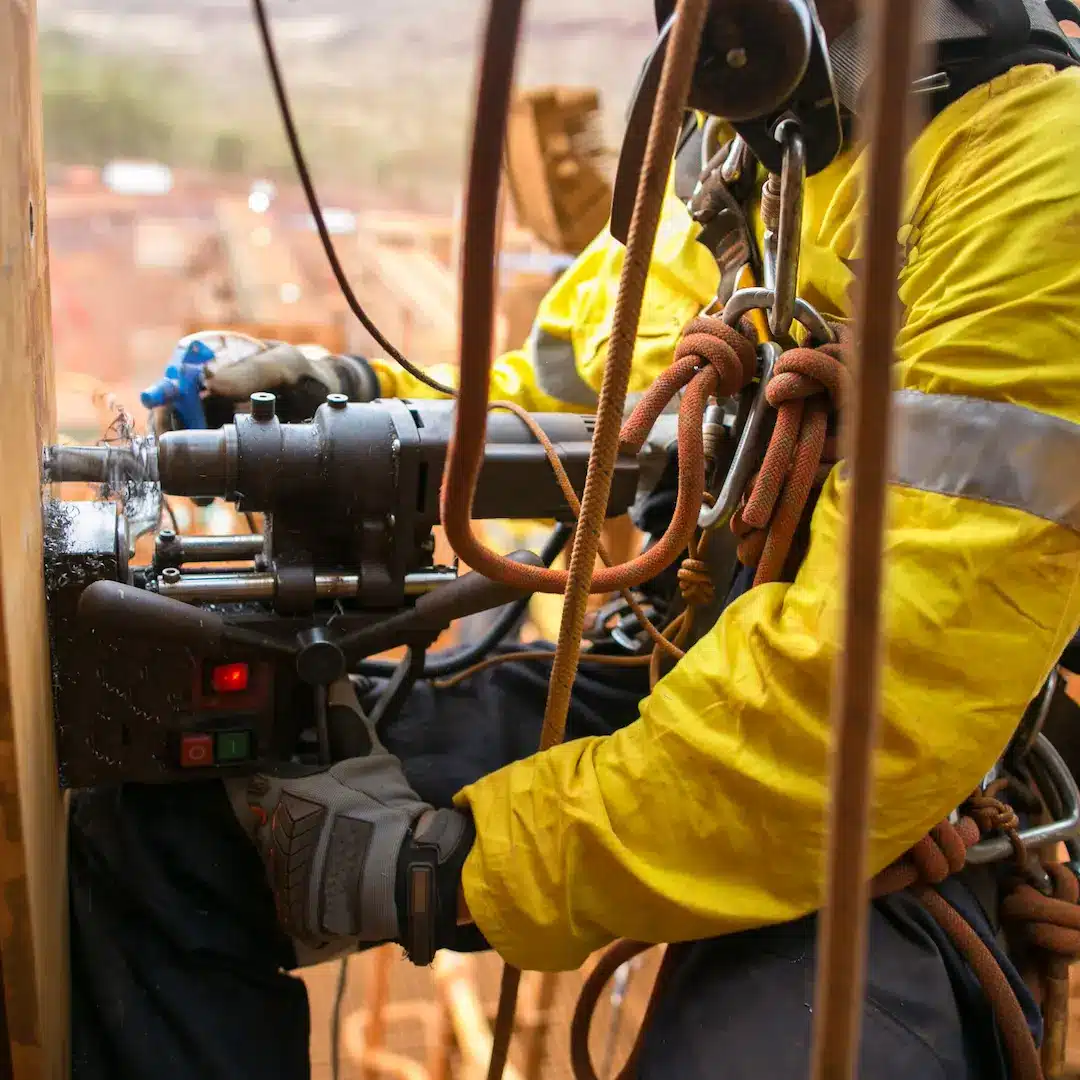
Different industries face different dropped object risks.
Construction sites often involve multiple trades working at different levels.
Common tethered tools include:
Telecoms engineers frequently work on towers, rooftops and elevated structures.
Compact tethering systems help maintain productivity while reducing risk.
Utilities workers often operate on poles, elevated platforms and network infrastructure where dropped tools can endanger personnel below.
Wind turbine technicians routinely work at significant heights where dropped object prevention is a critical safety requirement.
Maintenance teams rely on tethered tools to protect workers, equipment and production processes.
Even experienced workers can make mistakes that compromise safety.
Not every tether suits every tool.
Always select a solution appropriate for the tool’s weight, design and function.
Poor installation can reduce effectiveness and increase wear.
Always check the tether’s rated capacity before use. Leading Edge offers a comprehensive range of specialist tool tethers with working load limits from 2.5 kg to 45 kg, ensuring there is a suitable solution for a wide variety of tools and applications.
Inspect tethering equipment regularly for:
UK law says employers have to manage risks from falling objects and plan work at height to keep everyone safe.
Although regulations do not specifically state that every tool must be tethered, tool tethering is widely recognised as one of the most effective methods of preventing dropped object incidents.
For many organisations, tethering forms a key part of a broader dropped object prevention strategy.
Having the correct equipment is only part of the solution.
Workers also need to know how to choose, install, and check tethering systems properly, and that requires training.
Effective training helps teams understand:
Organisations that use high-quality equipment along with well-structured training tend to have much better safety results. Learn more about Leading Edge’s tool safety testing.
Sign up for the Leading Edge Tool Tethering course and master the process of identifying, selecting and applying the right tethering solutions for work at height with your existing tools.
Tool tethering is the process of securing a tool to a worker or anchor point using a rated tether to prevent dropped objects.
It reduces the risk of injury, equipment damage, and downtime caused by falling tools.
Any tool that could cause injury or damage if dropped from a height should be considered for tethering.
Wrap tethers and specialist attachment systems can create secure anchor points on tools that were not originally designed for tethering.
Yes, many cordless tools can be fitted with purpose-designed tethering systems. View our drill shoe.
Before every use and as part of a regular inspection programme.
Training helps ensure workers select and use tethering systems correctly and consistently. Learn more about our tool tethering training course.
Dropped objects remain one of the most preventable hazards associated with working at height.
By selecting the correct tethering solution, inspecting equipment regularly and providing workers with appropriate training, organisations can significantly reduce risk while improving operational efficiency.
Whether you’re looking to tether a single screwdriver or implement a site-wide dropped object prevention programme, the right solution starts with understanding your tools, your environment and your risks.
Explore our range of Tool Tethers, Wrap Tethers, Pro Shank Tethers and specialist training programmes to build a safer and more effective approach to working at height.
 Leading Edge is a UK based height safety training provider and PPE manufacturer. From small teams to multinational blue-chips, we empower people to work safely at height across a wide range of industries.
