
When working at height, every part of a fall protection system needs to work together. Height safety connectors are a critical link between equipment such as a safety harness, lanyard, or fall arrest device and a suitable anchorage point.
Karabiners, scaffold hooks, and other connectors may be small components, but they have an important job. They help keep workers securely connected to their fall protection system when working at height.
Choosing the right connector is only part of the equation. It must be compatible with the equipment and anchorage, correctly attached and used in accordance with the manufacturer’s instructions.
In this guide, we look at the different types of height safety connectors, common mistakes, and what to consider when selecting, using, and inspecting connectors for working at height.
A connector is a component used to connect parts of a personal fall protection system. Depending on the application, connectors can be used to connect a harness to a lanyard, connect equipment to an anchorage point, or join compatible components within a fall protection system.
Common examples include:
Connectors are manufactured for different uses and applications, so it is important to select equipment that is suitable for the task and compatible with the rest of the fall protection system.
A fall protection system is only effective when its individual components are suitable and work together correctly.
A connector may appear simple to use, but incorrect selection, attachment, or loading can compromise the system.
For example, a connector that has been incorrectly loaded, attached to an unsuitable point, or used with incompatible equipment may not perform as intended.
This is why workers need to understand not only what equipment they are using but also how each component should be connected and used.
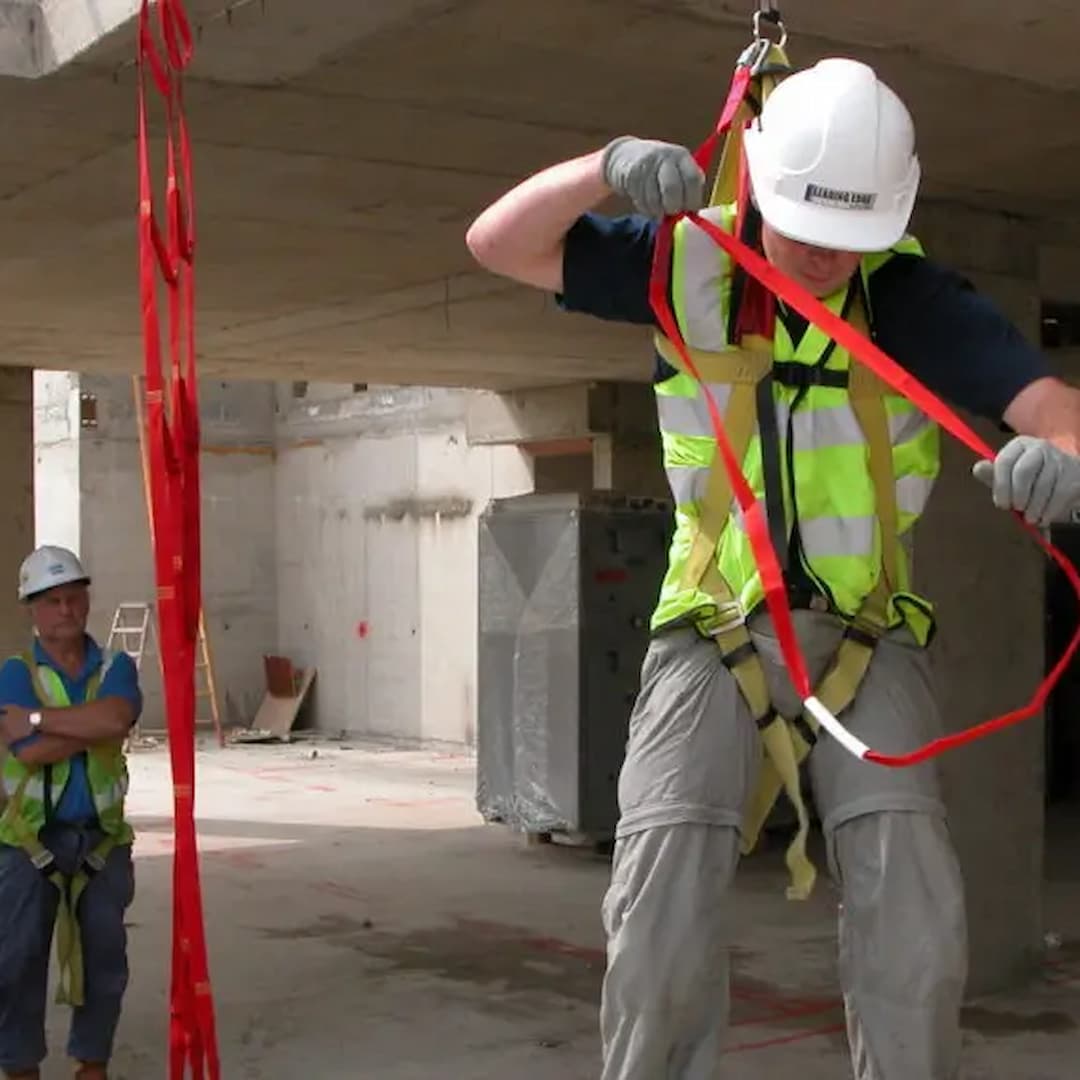
Scaffold hook connectors are typically positioned around scaffolding that rests on a horizontal member. This means that the gate of the scaffold hook will be pushed open due to the load that the horizontal member would exert in the event of a fall. This situation arises because the downward force or load from the cross-member acts across the axis of the gate on the scaffold hook, leading to a total failure of the hook. As a result, the hook gate may bend open, or in the worst-case scenario, it could even explode.
This is the point where a site worker receives a lanyard, typically featuring a small karabiner at the end. The worker instinctively wraps the lanyard around an anchor point, such as a column or beam, using the karabiner to tighten the lanyard around the anchor. A problem occurs if the worker falls, which can cause the tightened lanyard to apply a shock load to the karabiner gate, likely leading to the failure of the karabiner connector barrel. Karabiners are built to handle tensile (pull) forces along their length but are weakest when the load is applied across the minor axis (width) or against the gate. It is widely recognised that to design a connector capable of withstanding the directional load across the gate of the karabiner connectors, which has been choked during a fall, a gate strength of 5,000 lbs is necessary. Keep in mind that this dynamic loading failure across the gate applies to all types of connectors, including scaffold hooks, snap hooks, and karabiner connectors.
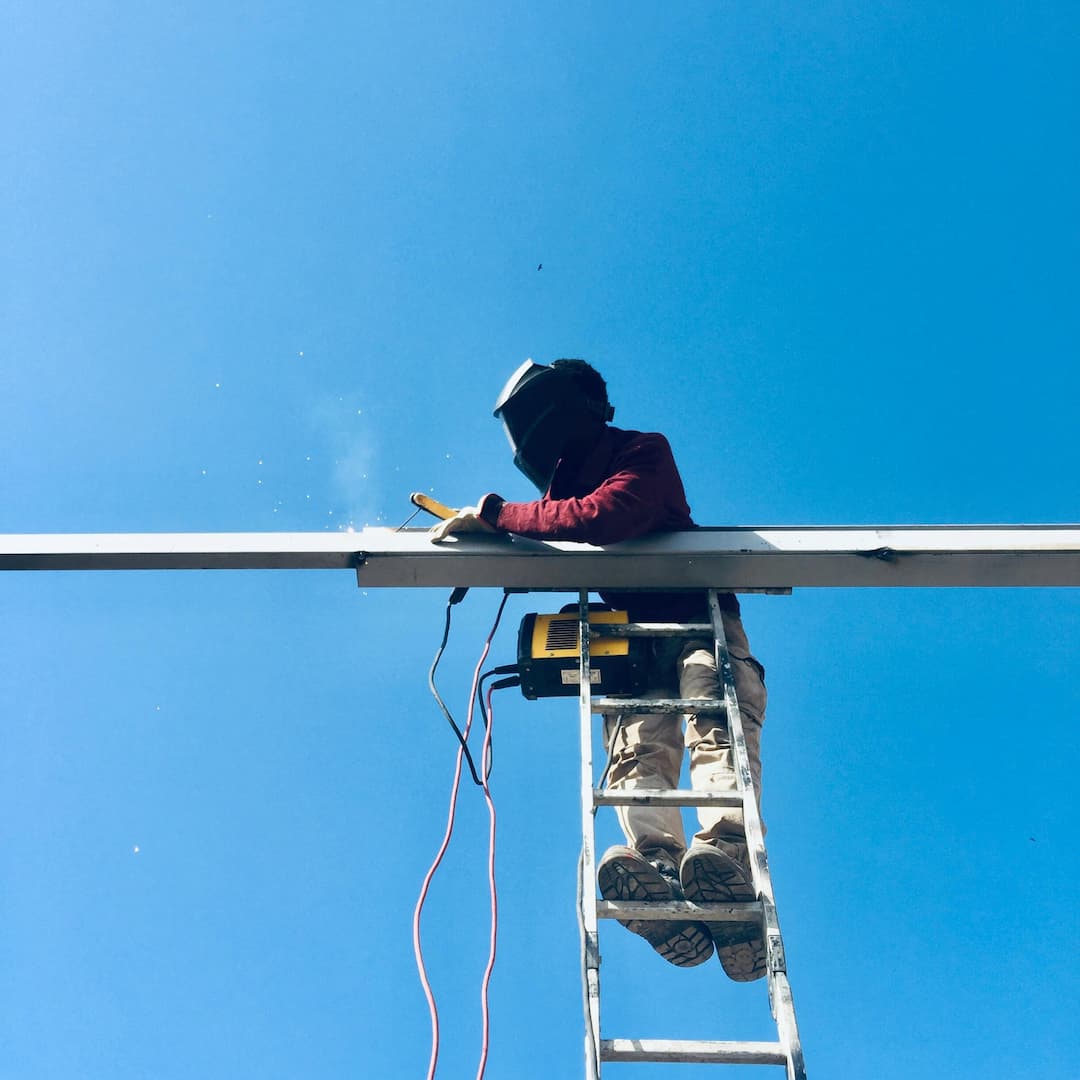
Different working-at-height applications require different types of connectors. The most appropriate option will depend on the equipment being connected, the working environment and the manufacturer’s instructions.
Working at Height Leading Edge level 1 and Working at Height level 2 courses cover identifying suitable anchor points.
Karabiners are commonly used as connecting elements within personal fall protection systems. They are available in different shapes and with different locking mechanisms to suit specific applications.
A karabiner must be used in the correct orientation and loaded as intended by the manufacturer. Users should also make sure that the gate and locking mechanism are fully closed before use.
Scaffold hooks have a larger gate opening than many standard karabiners, making them useful where workers need to connect to larger structures or suitable anchorage points.
As with all connectors, the scaffold hook must be suitable for the application and attached to a compatible anchorage or connection point.
Snap hooks are another type of connector used within fall protection systems. They are available in different designs and sizes, with locking mechanisms designed to reduce the risk of accidental opening.
The connector selected should always be compatible with the equipment and application.

BS EN 362 is the European standard covering connectors used with personal fall protection systems.
The standard sets requirements for connectors, including their testing, marking and information supplied by the manufacturer.
When selecting height safety connectors, always check the equipment specification and manufacturer’s instructions to make sure the connector is suitable for the intended application.
Connector misuse is one of the practical risks that can arise when working at height. Even when workers have the correct equipment, mistakes in how components are connected or used can affect the performance of the system.
Connectors are designed to withstand loads in specific directions. Incorrect loading, including cross-loading a karabiner, can affect how the connector performs.
Always follow the manufacturer’s instructions and make sure the connector is loaded as intended.
A connector should only be attached to a suitable connection or anchorage point.
Never assume that a convenient structure, handrail, scaffold member or other fixing point is suitable for fall arrest. The anchorage and supporting structure need to be suitable for the intended application.
Not every connector is suitable for every piece of height safety equipment.
Before using a connector, check that it is compatible with the harness, lanyard, fall arrest device, anchorage or other component it is being connected to.
A locking connector must be fully closed and locked before use.
Workers should check the connector before starting work and follow the manufacturer’s instructions for the particular locking mechanism.
Height safety equipment needs to be inspected regularly. Connectors should be checked for signs of damage, wear, corrosion, deformation and problems with the gate or locking mechanism.
Any equipment showing signs of damage or deterioration should be removed from service and dealt with in accordance with the manufacturer’s instructions and relevant inspection procedures.
Selecting the correct connector starts with understanding the application.
Consider:
The equipment being connected
Check that the connector is compatible with the harness, lanyard, fall arrest device, or other equipment.
The anchorage
Make sure the connector is suitable for the type and size of anchorage or structure it will be attached to.
The environment
Consider the working conditions, including exposure to dirt, moisture, chemicals, or other factors that could affect the equipment.
The connector design
Different gate sizes, shapes, and locking mechanisms are available for different applications.
The manufacturer’s instructions
Always follow the manufacturer’s information regarding compatible equipment, correct use, inspection, and limitations.
Regular inspection is an important part of managing fall protection equipment.
Before use, workers should check connectors for obvious signs of damage or deterioration. This can include:
Equipment should also undergo any formal inspection regime required by the manufacturer, company procedures, and relevant legislation or guidance.
If a connector is damaged, has been involved in a fall, or there is any doubt about its condition, it should be taken out of service and assessed appropriately.
Providing workers with suitable height safety equipment is only one part of effective fall protection.
Workers also need to understand how their equipment works, how components should be connected and what limitations apply.
At Leading Edge Safety, our experienced height safety trainers help construction and other industry professionals develop the practical knowledge they need to work safely at height.
Our training covers the selection and use of fall protection equipment, including harnesses, lanyards, connectors, and other components of personal fall protection systems.
Whether you’re responsible for workers on site or use height safety equipment yourself, the right training can help ensure equipment is used correctly and safely.
The right connector can play a critical role in a fall protection system, but it needs to be correctly selected, connected, inspected, and used.
If you need advice on height safety connectors, fall protection equipment, or working at height training, speak to the Leading Edge Safety team.
Explore our range of height safety connectors or contact us to discuss your requirements.
 Leading Edge is a UK based height safety training provider and PPE manufacturer. From small teams to multinational blue-chips, we empower people to work safely at height across a wide range of industries.
