
Skip to content
  • Why Leading Edge?
  • WORKING AT HEIGHT
  • Rescue
  • TOOL TETHERING
  • Training
  • Products
    • Tool tethering
      • Tether Points
      • Connectors
      • Tool Lanyards
      • Anchor Points
      • Tool Bags
      • Catch Bags
    • Training
      • Basic Awareness – Working at Height
      • Level 1 Operatives – Working at Height
      • Level 2 Managers – Working at Height
      • Ladder Height Safety
      • PPE Inspectors
      • Rescue – Single Method
      • Rescue – Multi Method
      • Drop Prevention

    Tool tethering

    • Tether Points
    • Connectors
    • Tool Lanyards
    • Anchor Points
    • Tool Bags
    • Catch Bags

    Training

    • Basic Awareness – Working at Height
    • Level 1 Operatives – Working at Height
    • Level 2 Managers - Working at Height
    • Ladder Height Safety
    • PPE Inspectors
    • Rescue – Single Method
    • Rescue – Multi Method
    • Drop Prevention

    Height Safety Equipment

    • Anchor point & Accessories
    • Fall Arrest Blocks
    • Lanyards
    • Safety Harness
    • Safety Lines & Rope Grab
    • Temporary Restraint Lifeline Kits
  • Knowledge
    • Support
      • Consultation
      • Tethering Roadmap
      • Trade Spheres
      • Tool Safety Testing
      • Tool Safety Steps
    • Downloads
      • Height Safety Training Catalogue
      • Drop Prevention Book
      • Course Booking Form
    • Videos
    • Blog
      • (Untitled)
      • View All Posts

    Support

    • Consultation
    • Tethering Roadmap
    • Trade Spheres
    • Tool Safety Testing
    • Tool Safety Steps

    Downloads

    • Height Safety Training Catalogue
    • Drop Prevention Book
    • Course Booking Form

    Videos

    Blog

    • Stress Awareness Month 2026: Addressing the Stress of Working at Height
    • Working at Height Statistics UK 2025: Falls, Fatalities & What the Data Really Tells Us
    • Inside the Life of a Leading Edge Height Rescue Instructor
    • View All Posts
  • Contact
£0.00 0 Basket
  • April 1, 2026

Working at Height Statistics UK 2025: Falls, Fatalities & What the Data Really Tells Us

Categories:

Working At Height

Tags:

construction safety statistics, falls from height, HSE statistics UK, UK workplace safety, working at height, working at height statistics UK

Every year, the Health and Safety Executive releases its annual fatal injury report. And every year, the same cause tops the list: falls from height.

Not vehicles. Not machinery. Falls from height. The single cause of workplace death that can most directly be prevented with proper training, planning, and the right equipment.

In fact, falls from height have been the leading cause of workplace fatalities in Great Britain almost every year since 2001. That’s not a coincidence. And it’s not acceptable.

In this article, we break down the latest HSE data published in July 2025, covering the 2024/25 reporting period, to give health and safety professionals, site managers, and employers a clear, data-driven picture of:

  • Where we currently stand
  • Which workers and industries are most at risk
  • What the latest numbers are really telling us

Understanding the data is the first step toward preventing the next fall.

The Headline Figures: UK Workplace Fatalities 2024/25

In 2024/25, 124 workers lost their lives in work-related accidents across Great Britain, 14 fewer than the previous year. At first glance, that looks like progress. In some ways, it is. But the numbers tell a deeper story.

Those 124 deaths reveal some stark realities about workplace safety:

  • 35 fatalities, more than one in four were caused by falls from height
  • 95% of those killed were male workers
  • 40% of fatalities involved workers aged 60 and over, even though this group makes up just 12% of the workforce
  • Construction and agriculture accounted for 47% of all workplace deaths, despite employing only a small share of the overall workforce

Once again, falls from height dominate the statistics. In fact, more workers died from falls from height than from being struck by a moving object and being hit by a moving vehicle combined.
Together, these three causes account for around 60% of all workplace fatalities in Britain, year after year.
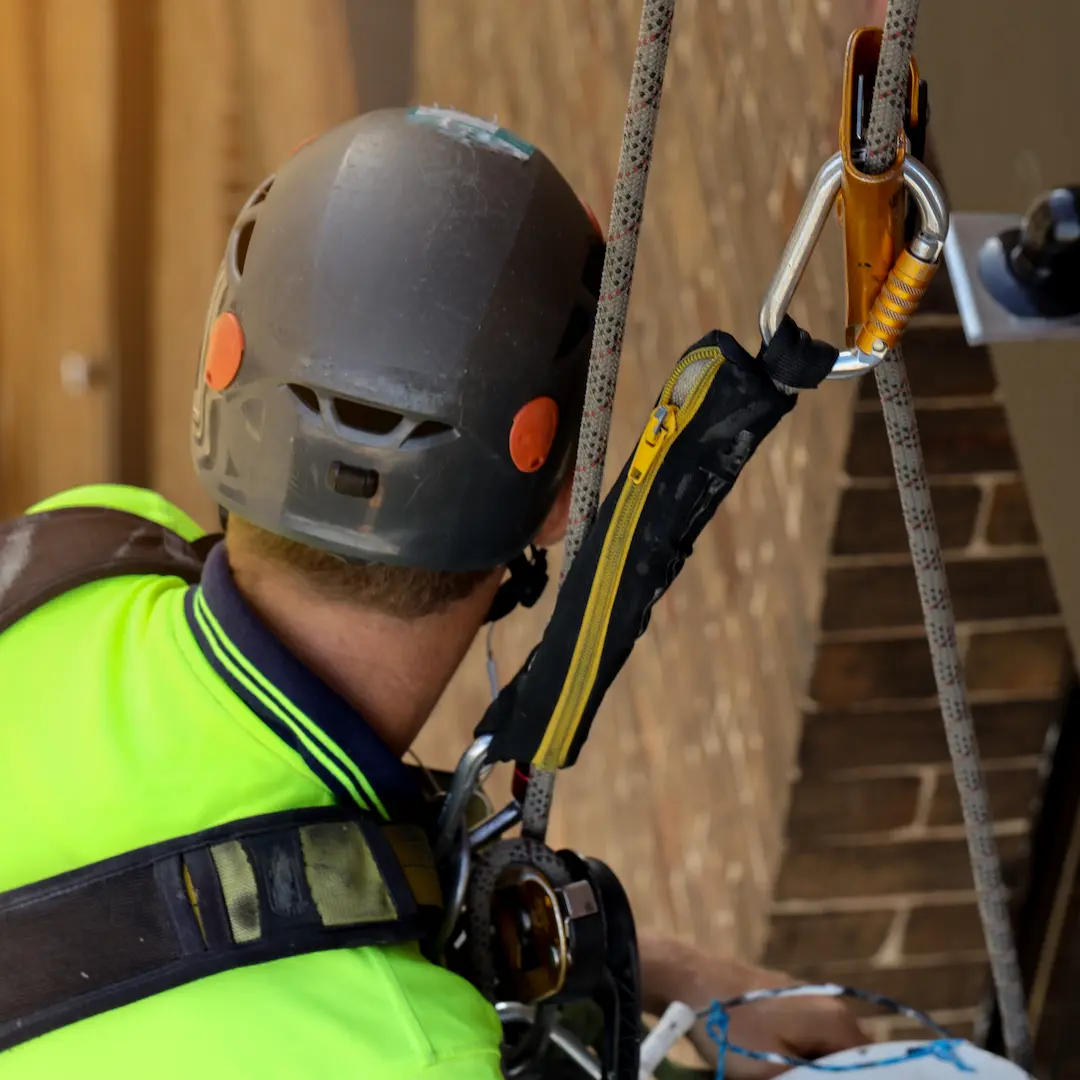
Male achored to work at height

Construction: Still the Most Dangerous Major Industry

For anyone involved in the construction sector, these statistics are impossible to ignore.

In 2024/25, construction accounted for 28% of all workplace fatalities in Great Britain, which is the highest proportion of any industry. With 35 construction workers killed, the sector’s fatal injury rate is around five times higher than the all-industry average.

The long-term trend is just as concerning.

Between 2020/21 and 2024/25, falls from height caused more than half of all construction fatalities, with an average of 21 workers losing their lives to falls each year. No other accident type comes close to matching that figure within the sector.

For anyone responsible for running or managing a construction site, one statistic should stand out: construction workers are five times more likely to be killed on the job than the national average. That’s a number every site manager should have front and centre.

The Self-Employed Risk: A Significantly Overlooked Problem

Self-employed workers make up around 15% of the workforce, yet account for roughly 40% of all workplace fatalities.

Their fatal injury rate is about three times higher than that of employees. Even when factoring in their greater presence in high-risk sectors like construction, the gap remains significant.

In construction alone, nearly 45% of fatal injuries over a five-year period involved self-employed workers, which is above the all-industry average.

The reasons are clear. Self-employed workers are less likely to receive formal safety training, less likely to be closely supervised, and more likely to make cost-driven decisions about PPE and equipment. They also tend to work alone more often, reducing the chances of a rapid response if something goes wrong.
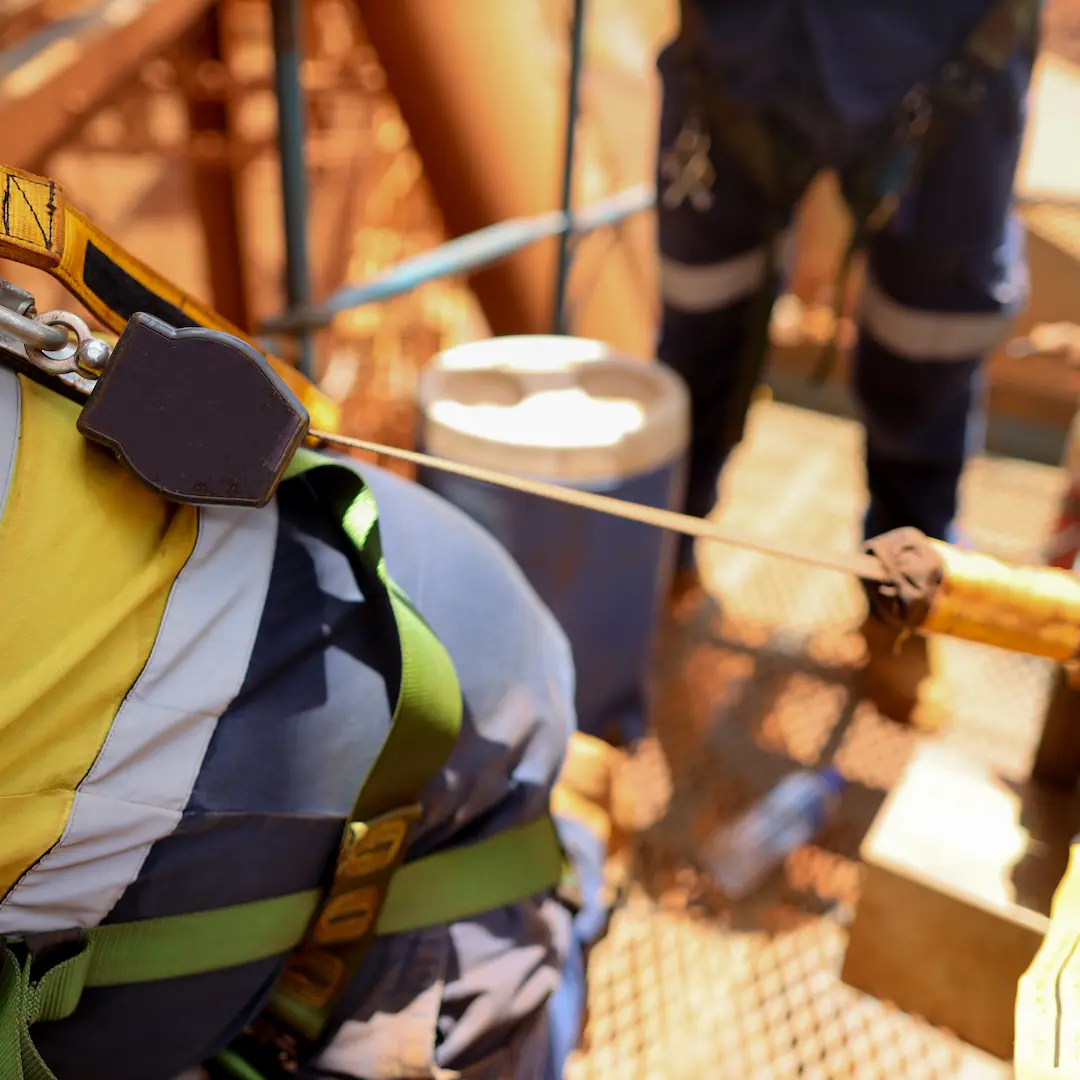
Work at height safety PPE - lifeline and harness

Key Statistics at a Glance

Here is a summary of the confirmed 2024/25 figures sourced directly from the HSE’s annual fatal injuries report:

  • 124 workers killed in work-related accidents in Great Britain in 2024/25
  • 35 deaths caused by falls from height, the leading cause for the majority of years since 2001/02
  • Falls from height represent over a quarter (28%) of all worker fatalities
  • Construction accounted for 28% of all worker fatalities in 2024/25
  • Construction’s fatal injury rate is approximately 5x the all-industry average
  • Falls from height account for over half of all construction deaths across the five-year average
  • Self-employed workers make up 15% of the workforce, but 40% of fatalities
  • The self-employed fatal injury rate is approximately 3x that of employees
  • 95% of all worker fatalities were male
  • Workers aged 60 and over account for around 40% of fatalities despite being 12% of the workforce
  • Falls from height = 8% of non-fatal injuries but 28% of fatalities, uniquely lethal compared to most other accident kinds

The Data Points to One Conclusion

124 deaths are 124 too many. Each one is a worker who left for a job and didn’t return home.

In most cases, the fall that caused their death was preventable, not with hindsight, but beforehand. The necessary planning, equipment, and training are well understood and clearly set out in law. They simply weren’t in place.

Working at height will never be risk-free. But the difference is clear: competent, well-trained workers, using the right equipment and following a proper plan with an effective rescue procedure, are significantly safer.

This data consistently points to the same issues: gaps in training, supervision, and equipment. And it has been telling us this for the past twenty years.

Working at Height Training That Addresses the Risk Directly

If the statistics above have made you question whether your team is truly prepared for work at height, Leading Edge Safety can help you take decisive action. Our accredited courses are specifically designed for the roles and individuals where the risk is highest, because preventing accidents starts with competence.

From a half-day Basic Awareness course for operatives new to height work, to Level 1 Operatives and Level 2 Managers programmes that meet the legal requirements of the Work at Height Regulations 2005, we cover every level of need. For teams facing even greater challenges, we offer specialist training in Ladder Safety, PPE Inspection, and Height Rescue, equipping them to go further and stay safer.

When you enrol in a Leading Edge course, you gain far more than theoretical knowledge. You’ll have the opportunity to work hands-on with essential height safety equipment while developing practical techniques designed to keep you safe when working at height, all delivered in a controlled, ground-level training environment. In addition, you’ll learn from experienced industry professionals how to correctly select, fit, and use your personal protective equipment, ensuring you work safely, confidently, and in full compliance with best practice standards.

Don’t wait for an accident to highlight where the gaps are. Explore our full range of working-at-height courses today to ensure your team has the knowledge, skills, and confidence to stay safe.

 

PrevInside the Life of a Leading Edge Height Rescue Instructor
Stress Awareness Month 2026: Addressing the Stress of Working at HeightNext

Keep up to date

Get the latest height safety articles, product updates and deals.
sign up
About Us
Leading EdgeLeading Edge is a UK based height safety training provider and PPE manufacturer. From small teams to multinational blue-chips, we empower people to work safely at height across a wide range of industries.

info
  • Home
  • About Us
  • Blog
  • Downloads
  • FAQ
  • Contact
support
  • Delivery
  • Export
  • Terms & Conditions
  • Cookie Policy
  • Privacy Statement
contact
  • +44 (0) 1920 824 100
  • sales@leadingedgesafety.co.uk
  • Leading Edge Safety, Langley House, Station Road, Standon, Hertfordshire, SG11 1QN
social

Copyright 2025 Leading Edge Safety. Devloped by Czargroup Technologies

Working At Height Training & Equipment
Manage Consent
To provide the best experiences, we use technologies like cookies to store and/or access device information. Consenting to these technologies will allow us to process data such as browsing behaviour or unique IDs on this site. Not consenting or withdrawing consent, may adversely affect certain features and functions.
Functional Always active
The technical storage or access is strictly necessary for the legitimate purpose of enabling the use of a specific service explicitly requested by the subscriber or user, or for the sole purpose of carrying out the transmission of a communication over an electronic communications network.
Preferences
The technical storage or access is necessary for the legitimate purpose of storing preferences that are not requested by the subscriber or user.
Statistics
The technical storage or access that is used exclusively for statistical purposes. The technical storage or access that is used exclusively for anonymous statistical purposes. Without a subpoena, voluntary compliance on the part of your Internet Service Provider, or additional records from a third party, information stored or retrieved for this purpose alone cannot usually be used to identify you.
Marketing
The technical storage or access is required to create user profiles to send advertising, or to track the user on a website or across several websites for similar marketing purposes.
  • Manage options
  • Manage services
  • Manage {vendor_count} vendors
  • Read more about these purposes
Adjust Cookie Settings
  • {title}
  • {title}
  • {title}
