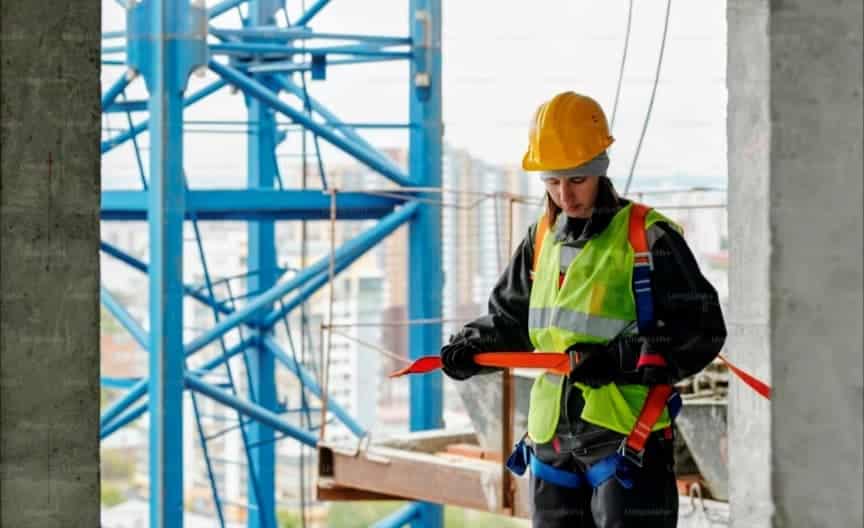
The beginning of the year is the perfect opportunity for construction managers and health and safety managers to enhance their height safety compliance, reset performance benchmarks, and tackle working-at-height risks before site activity ramps up. As Q1 brings winter hazards, expired training, and a surge in site mobilisation, having a straightforward and practical Q1 Height Safety Checklist is crucial for minimising fall-from-height incidents, which are the leading cause of fatal injuries in the UK construction industry.
This Height Safety Compliance Checklist 2026 provides a structured, CDM-aligned framework to help UK construction companies improve safety control, validate competence, and ensure total compliance with the Work at Height Regulations 2005.
As we kick off the year, construction sites are presented with new risks, including:
By taking a proactive approach to height safety in the first quarter, we can significantly lower the risk of falls and ensure better CDM compliance throughout 2026.
A strong Height Safety Audit provides the foundation for any good Height Safety Compliance Checklist, particularly at the beginning of 2026. Conducting this audit in Q1 will ensure that your height-safety systems, workforce competence, and regulatory documentation meet all the requirements of the Work at Height Regulations 2005, CDM 2015, and best practice standards recognised within the construction industry.
This step must be led by a competent person with verified experience in assessing work-at-height operations, such as a dedicated height-safety specialist, a certified safety manager, or a recognised external provider. A quality audit knits together technical understanding, practical site knowledge, and regulatory expertise that are so essential in finding the gaps leading to falls, enforcement notices, or stop-work orders.
A comprehensive height-safety audit should cover:
Always evaluate all forms of collective fall-prevention that take precedence over personal fall-arrest equipment:
Ensure SG4 compliance and manufacturer specification and confirm winter weather has not affected stability, fixings or surface condition.
Check all personal fall-arrest systems for wear, defects, expiry, damage, and correct certification. This shall include:
Ensure all access equipment used to work at heights is safe, compliant, and fit for purpose:
Check that winter conditions, such as ice, condensation or debris, have not made the steps, platforms, stabilisers or ground conditions unsafe.
An expert review should evaluate controls for roof work, including:
Roof work is still one of the highest-risk activities in UK construction, and Q1 conditions dramatically increase the likelihood of slips, collapses, and falls.
Check that any raised areas are adequately lit to allow safe passage, especially during poor winter mornings and afternoons. Check:
These environmental factors directly influence the likelihood of falls from heights.
To ensure full regulatory alignment, a height-safety audit must cover:
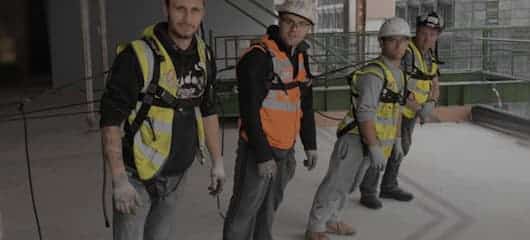
With prevailing winter conditions, teams must be reminded of the seasonal height-related risks that can dramatically increase the likelihood of accidents, such as ice build-up, high winds, slippery conditions, and low visibility in the evening shifts.
Attention should also be given to using towers, MEWPs, ladders, and edge protection safely. Guidance, checks against competency, and equipment-related toolbox talks will increase operative’s confidence and competence, which in turn will limit the potential for falls and equipment failure. Site managers should also consider reviewing site rescue policies and emergency plans, as they provide a valuable opportunity to communicate this information to their workforce, educating all personnel on how to react quickly in the event of an accident.
To maintain full compliance, a review of site rules, exclusion zones, and access routes needs to be incorporated in Q1 to help supervisors and contractors navigate safely around work-at-height areas. Changes related to temporary works, anchor points, and supervisors should be briefed out and recorded in order to maintain a robust set of safety controls.
Competency verification is a core requirement of the Work at Height Regulations 2005, and Q1 provides a perfect opportunity to verify that anyone working at height has professional, up-to-date certification.
Start with checking expiry dates for IPAF, PASMA, general Work at Height training, and rescue training; ensure that nobody accesses height-risk areas or operates equipment without a valid certification. For projects introducing new teams, make sure you have competency evidence from subcontractors starting in January, including documented skills, licenses, and site-specific induction records. Leading Edge can provide training for all staff required to work at height.
It’s equally important to ensure that those who are undertaking equipment checks have the right approvals to do so. Check PPE inspection competence, such as harness and lanyard inspection training, so you can be confident equipment will remain safe and compliant throughout winter.
Lastly, update your training matrix with the inclusion of new 2026 starters, identifying compulsory courses, refresher deadlines, and specialist skills that are required for future work phases.
Risk Assessment Method Statement (RAMS) should be reviewed for updates in relation to present site conditions, particularly as new hazards emerge with the onset of winter conditions that can now pose a direct hazard to work at height. This also ensures that your teams are working with tasks planned using present, rather than outdated, information.
Start with refreshing RAMS to incorporate hazards in relation to winter, for example, frost, ice build-up in access routes, wind chill, and low visibility due to early mornings and evenings with decreased visibility. Such hazards pose distinct risks and ought to be articulated in a manner that prepares for their control.
If your project has resulted in new raised areas of working or has varied access arrangements, it is essential to make absolutely certain that RAMS are updated to reflect access platform changes, scaffold layouts, and new work at height area definitions.
RAMS should also take into account any new plant, equipment, or up-to-date sequencing, especially if MEWPs, cranes, and/or temporary works are involved with height tasks.
Lastly, incorporate the insights from incidents in 2025 by using actual site data in your documents. This reflects a continuous effort for improvement. Site managers are required to communicate all updates to all workers.
The holiday season often leaves work-at-height equipment sitting idle for weeks, which can result in hidden issues, wear and tear, or overlooked defects. Before kicking off operations in Q1, it’s crucial to carry out a comprehensive inspection to make sure that every piece of equipment is safe, compliant, and ready for use.
Start by completing all necessary LOLER examinations, which include checking lifting accessories, lifting points, and MEWP inspections to ensure that platforms are functioning smoothly and safely. Next, conduct PUWER inspections for ladders, podiums, mobile towers, and powered tools, confirming that each item is structurally sound and fully adheres to manufacturer guidelines.
Don’t forget to perform detailed visual and functional checks on all guardrails, scaffolding, and edge-protection systems, paying special attention to areas that may have been exposed to frost, strong winds, or water during the holiday shutdown. Also, assess height PPE, including harnesses, lanyards, and anchor points, making sure they are clearly tagged to indicate their inspection status.
To promote safer operations, run functionality tests on alarms, sensors, proximity systems, and MEWP emergency-stop mechanisms, ensuring that all safety-critical features work as they should. Finally, update your inspection registers and introduce new colour coding for 2026, providing supervisors and operatives with a clear, visible assurance that the equipment has been thoroughly checked and approved.
It’s crucial to validate emergency rescue plans at the beginning of each year to ensure that all teams are well-prepared for any incidents that may occur at height.
Start with a thorough review of your rescue plan and an equipment check. Make sure that stretchers, rescue kits, MEWPs, ropes, and other essential tools are in good working order and ready for immediate use. It’s also important to confirm that qualified rescue personnel are on hand, with up-to-date training and experience that aligns with the specific risks present on your site.
Run test scenarios for rescue procedures, including MEWP rescues and recovering suspended workers, to ensure that every step can be executed under realistic conditions. Don’t overlook the importance of testing communication systems, such as radios, alarms, and PA systems, so that teams can quickly alert responders and coordinate effectively during an emergency.
Make sure that fire points, spill kits, and signage for elevated work areas are clearly visible, easily accessible, and properly positioned. This not only helps manage secondary risks that could complicate a rescue but also reinforces a strong safety culture across the site.
A well-structured and clearly communicated rescue plan is vital for maintaining operational safety and regulatory compliance throughout 2026, ultimately protecting both personnel and project outcomes. Leading Edge can assist with Rescue training.
Use last year’s performance to enhance this year’s height-safety strategy. By diving into past data, organisations can spot trends, tackle recurring risks, and put proactive measures in place that boost both safety outcomes and operational efficiency.
Start by looking at falls from height, dropped objects, and near misses to see where interventions worked and where there are still gaps. Take a close look at scaffold, MEWP, and ladder compliance issues, paying attention to patterns of misuse or non-compliance, and assess any RAMS failures or miscommunication events that might have led to unsafe conditions. Don’t forget to review tool-tethering practices and housekeeping trends, as these often reveal deeper safety culture challenges that need to be addressed.
With these insights in hand, set clear and measurable Q1 KPIs to drive improvement. Some examples include:
By systematically analysing past performance and setting measurable targets, organisations can showcase their competence, reliability, and authority in height-safety management. This evidence-based approach not only enhances safety outcomes but also strengthens regulatory compliance, operational resilience, and fosters a culture of continuous improvement as we move into 2026.
A well-organised Height Safety Compliance Checklist is one of the best ways to safeguard workers, enhance CDM compliance, and minimise project delays in Q1 2026. By carefully reviewing RAMS, confirming skills, auditing equipment, and promoting site discipline, construction sites can foster safer, more controlled, and compliant work environments.
For dependable support, many contractors in the UK turn to Leading Edge Safety, experts in fall-prevention systems, tool-tethering, and work-at-height training that ensure your teams stay safe throughout the year.
 Leading Edge is a UK based height safety training provider and PPE manufacturer. From small teams to multinational blue-chips, we empower people to work safely at height across a wide range of industries.
