
A new year is the perfect time for construction sites to reassess their safety commitments and ensure teams have the training they need to work safely and confidently. For site managers and health & safety professionals, nothing commands more attention than working at height, still one of the leading causes of serious injuries and fatalities throughout UK construction.
Despite strict regulations, poor work-at-height training continues to pose a major problem, with workers, management and the entire project exposed to unnecessary risks. As 2026 begins, now is the time to close any training gaps, enhance safety culture and make each worker who operates at heights fully competent.
This guide will cover the key risks, the essential training required, and how Leading Edge can support you in creating a safer, compliant site.
The case of fatal falls from height always leads the accidents in construction. The workers, if not properly trained, could:
These gaps greatly raise the chances of injury or death.
Poor training for businesses is not only a risk but also a liability.
A height-related incident may cause
Of course, providing robust training is not only a moral obligation but also a legal and commercial necessity.
Falling tools and materials can lead to life-altering injuries for people working below. Training in tool tethering is needed to prevent avoidable incidents, and the correct equipment, such as debris catch bags, can prevent falling material.
Wind, rain, ice, and heat all impact height safety because they all affect stability, grip, and worker concentration.
Extended time at height increases dehydration, fatigue, and reduced focus, major contributors to human error.
Before any height work commences, site managers should evaluate:
A robust risk assessment saves lives, prevents delays, and protects the business.
Workers should be trained in:
Training should be refreshed on a regular basis. By completing a Leading Edge course, you will be awarded an industry-recognised Leading Edge license card and certificate. The card is valid for 3 years and requires renewal after the expiry date stated at the time of issue.
Training shall include:
Incorrect use of PPE remains one of the most common root causes of preventable incidents.
Workers need to be competent at inspecting:
Damaged or questionable equipment should never be used.
Effective communication prevents misunderstandings and keeps teams aligned with safety protocols. Radios and signage all play a part here.
A prompt rescue can be lifesaving. Suspension intolerance may occur within five minutes, and the necessity of a well-rehearsed rescue plan is crucial.
The HSE defines work at height as any location where, without precautions, a person could fall a distance liable to cause personal injury. The focus is on the risk of injury, not a specific measurement. There is no minimum height, so working a few feet up on a stepladder, off a roof edge, into a hole or close to fragile surfaces counts if a fall could cause harm.
At Leading Edge, we specialise in ensuring your workforce is competent, confident and compliant.
From construction to industrial maintenance, our courses are tailored to your environment, work methods and equipment. As both a training provider and safety equipment manufacturer, we offer a depth of insight other providers simply cannot match.
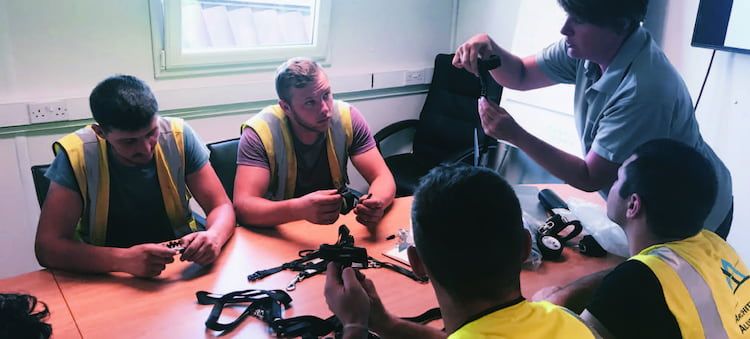
Our trainers bring years of hands-on experience, delivering practical, scenario-based learning that sticks.
All training is developed to meet and exceed British industry standards.
We deliver nationwide on-site courses or open enrolment sessions at our Hertfordshire training centre. We do not offer online working-at-height courses, as these do not provide the practical competence required to work safely.
Inadequate training is more than a compliance issue; it is an ethical and operational risk. Workers have the right to return home safely every day, and site managers have a responsibility to ensure they receive the training and equipment required to do so.
Leading Edge is here to help you strengthen your safety culture, upskill your workforce and stay compliant throughout 2026.
View our specialist work-at-height training courses
Speak to our team about bespoke training packages
Gravity never sleeps, so neither do we! Let’s make this year your safest yet, starting today.
 Leading Edge is a UK based height safety training provider and PPE manufacturer. From small teams to multinational blue-chips, we empower people to work safely at height across a wide range of industries.
