
Every new worker joining a construction site brings new opportunities, but they also introduce new responsibilities for the companies hiring them.
For site managers, welcoming new people onto a project often means juggling several priorities at once. They must keep work moving, meet deadlines, manage subcontractors, and ensure that each person on site has the right skills and knowledge to work safely.
This challenge becomes even more critical when new employees must perform tasks where there is a risk of falling from height.
Whether someone is working from a scaffold, a ladder, a MEWP, installing services, doing maintenance work, or using fall protection gear, they need to understand the hazards involved and how to control them before starting the task.
Working at height remains one of the biggest risks in the construction industry. A fall doesn’t have to be from a great distance to cause a serious injury. Even falls from relatively low heights can lead to life-changing consequences.
For site managers, the focus is not just on completing a training record. They must ensure that every worker has the knowledge, confidence, and practical understanding needed to make safer decisions while working on site. This is why effective working at height training for new employees is such an important part of the onboarding process.
Experienced workers often understand the risks around them through years of hands-on experience. They can recognise hazards, grasp site expectations, and notice when something seems off.
New employees do not always have that same awareness.
A new starter may be unfamiliar with the following:
This does not mean new workers are unsafe. It means they need the right support, instruction, and supervision to build their skills.
One of the biggest mistakes companies can make is thinking that past experience automatically means someone is skilled on a new site. Every workplace has different risks, equipment, and procedures.
A worker who has previously used a harness, for example, may still need guidance on:
Good induction and training help eliminate uncertainty before it leads to a safety issue.

Effective working at height training is about more than memorising safety rules. It’s about helping workers recognise danger, make better decisions and know when something isn’t right before an incident happens.
Before stepping onto site, every worker should understand three key things:
What could go wrong, how to use their equipment correctly, and when to stop and ask for help.
The safest workers are the ones who recognise hazards before they become problems.
Before starting any work at height, employees need to understand how to identify potential dangers, including:
A few seconds spent stopping and assessing a situation can prevent a life-changing accident. Developing this awareness early helps new workers build the right safety mindset from their first day on site.
Harnesses, lanyards and fall protection systems are designed to protect workers — but only when they are used correctly.
Simply wearing a harness does not make someone safe. Workers need to understand how the entire system works and the role they play in using equipment properly.
Training should help employees understand:
The right equipment is only effective when workers know how to use it properly.
One of the most important lessons a new worker can learn is that stopping work is not a failure; it is the right decision.
A strong safety culture depends on workers feeling confident enough to say:
“Something doesn’t look right.”
New employees should understand that they are expected to:
The most experienced workers are the ones who recognise when something needs to change.
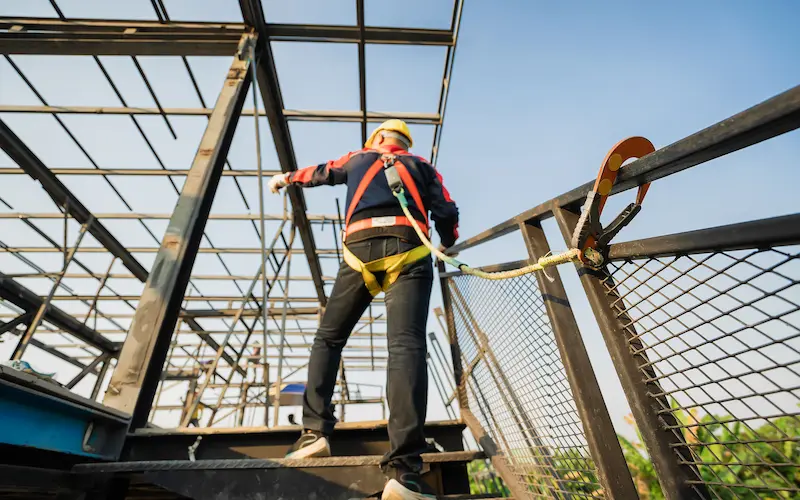
At Leading Edge Safety, our trainers regularly work with construction teams and see similar challenges across different sites.
Many of these issues are not caused by carelessness. They are often caused by workers not fully understanding the risks or not having enough practical experience.
A harness can only provide effective protection when it is fitted and adjusted correctly.
One of the most common issues trainers see is workers wearing harnesses that are too loose, incorrectly positioned or not adjusted to suit their body shape.
During practical training, workers learn how to:
Taking a few minutes to fit equipment properly before starting work can make a significant difference when it matters most.
A common misconception among new workers is that wearing PPE automatically eliminates the risk of injury.
The reality is that PPE is only one part of a complete fall protection system.
Workers also need to understand:
Effective height safety comes from understanding the whole system, not just putting on PPE.
Height safety equipment should never be used without first checking that it is suitable and in good condition.
New workers may not always know what signs to look for, which is why understanding equipment inspections is such an important part of training.
Workers should know how to identify the following:
If something does not look right, the safest decision is always to stop and ask.
On busy construction sites, there can sometimes be pressure to complete tasks quickly. For new workers, this can create situations where they feel they need to prove themselves or avoid slowing the team down.
This is where a strong safety culture makes a difference.
Workers should understand that:
The safest worker is not always the fastest; it is the person who recognises the risk before it becomes an incident.
There is an important difference between knowing something and being confident applying that knowledge.
A worker may understand the theory behind wearing a harness, but practical experience helps them understand:
One of the biggest improvements we see after practical face-to-face training is confidence. Many workers are not unsafe because they don’t care. They simply haven’t had the opportunity to properly understand the equipment and how it should be used. Once they have that knowledge, they are much better equipped to make safer decisions on site.
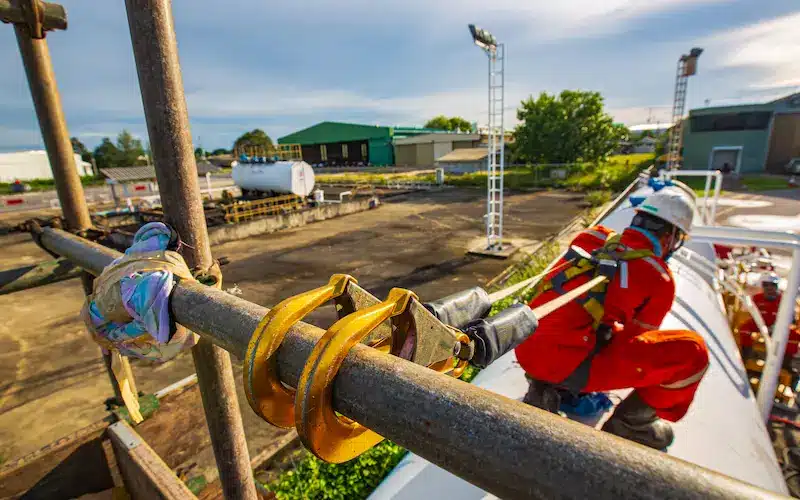
Keeping a construction project moving is challenging enough without adding unnecessary downtime. New starters need training. Deadlines still need to be met. Productivity still matters.
That’s why many site managers choose on-site working at height training, giving workers the knowledge and practical skills they need without taking them away from the project for extended periods.
No travelling to external venues. No losing valuable hours on the road.
Training is delivered where your team works, helping minimise disruption and keeping your programme moving.
Every site is different.
On-site training allows workers to connect what they learn with the equipment, environment and tasks they face every day. This makes the training more relevant and easier to apply.
When new starters, subcontractors or existing workers train together, everyone understands the same expectations.
From equipment checks to safe working practices, your team builds a consistent approach to working safely at height.
Working at height is practical, so training should be too.
Workers don’t just learn the theory. They practise using real height safety equipment, ask questions and build confidence before applying those skills on site.
The result? A workforce that is better prepared, more confident and ready to work safely.
Designed for new starters and existing workers, our 3½-hour Basic Awareness – Working at Height course gives delegates the essential knowledge and practical skills they need before carrying out work at height. Combining classroom learning with hands-on training, the course helps workers understand the risks, recognise hazards and use height safety equipment with greater confidence.
Delegates will learn how to identify common working at height hazards, correctly fit and inspect a harness, understand the role of lanyards and fall arrest systems, and carry out basic pre-use equipment checks. Practical exercises give every participant the opportunity to use real equipment, ask questions and build confidence before returning to site. Upon successful completion, delegates receive a Leading Edge licence card and certificate, valid for three years, providing evidence of their training.
Working at height training is essential for anyone whose role involves a risk of falling. Whether you’re onboarding apprentices, labourers, subcontractors, maintenance teams or experienced operatives joining a new project, every worker should understand how to recognise hazards and use height safety equipment safely.
Even experienced workers benefit from refresher training when moving to a new site. Every project has different risks, procedures and expectations, making a practical induction an important step in helping workers start safely and confidently.
September is one of the busiest recruitment periods in construction, with new apprentices, agency workers and permanent employees joining sites across the UK. It’s the ideal time to review training records, refresh existing knowledge and ensure every new starter has the skills and confidence to work safely at height from day one.
A few hours of practical training at the start of a project can help build safer habits, improve confidence and reassure site managers that their workforce is ready for the job ahead.
Bringing new workers onto site doesn’t have to mean compromising on safety or productivity. By giving employees the right knowledge and practical experience before they begin working at height, you’re investing in safer behaviours, greater confidence and a stronger safety culture from day one.
Ready to get your workforce site-ready? Contact Leading Edge Safety to book your on-site Basic Awareness – Working at Height course and help your team start work safely, confidently and competently.
Our Basic Awareness – Working at Height course takes just 3½ hours to complete. It’s designed to fit around busy construction schedules, allowing you to train new starters in half a day with minimal disruption to your project.
If a worker is at risk of falling while carrying out their job, they should receive suitable instruction and training before starting work. The level of training required will depend on the tasks they perform and the equipment they use.
The Work at Height Regulations 2005 require employers to ensure anyone working at height is competent or supervised by someone who is. Suitable training plays an important role in developing that competence, alongside planning, supervision and safe systems of work.
Yes. Leading Edge delivers training at your workplace, providing all the necessary height safety equipment. All you need to provide is a suitable room for the classroom session.
Absolutely. The course is ideal for apprentices, new employees, agency workers and anyone who needs a practical introduction to working safely at height before starting work on site.
Yes. We provide all the equipment required for the practical training, including harnesses and height safety equipment, so your team can gain hands-on experience using the correct equipment.
Our on-site training can be delivered to groups, making it a practical and cost-effective solution for onboarding multiple new starters or refreshing existing teams. Contact us to discuss the best option for your workforce.
Every successful project starts with a competent workforce. By investing just 3½ hours in practical working at height training, you can help new employees recognise hazards, use equipment correctly and develop safer working habits from the moment they step onto site.
Our on-site Basic Awareness – Working at Height course is designed to minimise disruption while giving your team the confidence and practical skills they need to work safely.
Ready to get your workforce site-ready? Get in touch with Leading Edge Safety today and book your on-site training.
 Leading Edge is a UK based height safety training provider and PPE manufacturer. From small teams to multinational blue-chips, we empower people to work safely at height across a wide range of industries.
